




Feeling drained by endless screen time? You’re not alone. By 2026, 92% of people are cutting back on digital use, seeking relief from mental exhaustion caused by constant notifications and decisions. The solution? Nature.
Here’s why:
- Digital fatigue is real. Your brain burns energy faster managing screens than physical tasks, leaving you tired and unfocused.
- Nature restores balance. Activities like hiking or spending time by the water provide mental clarity and physical sensations screens can’t replace.
- Outdoor experiences matter. 74% of people say time outdoors improves mental health more than any app or tool.
As AI and remote work reshape life, more people are trading digital clout for real-world adventures. Mountain towns and coastal areas are thriving as hubs for those seeking meaningful escapes. Whether it’s skiing, surfing, or simply being present, the outdoors is becoming the ultimate way to recharge.
The takeaway? In a hyper-digital world, mountains and oceans aren’t just escapes - they’re lifelines.
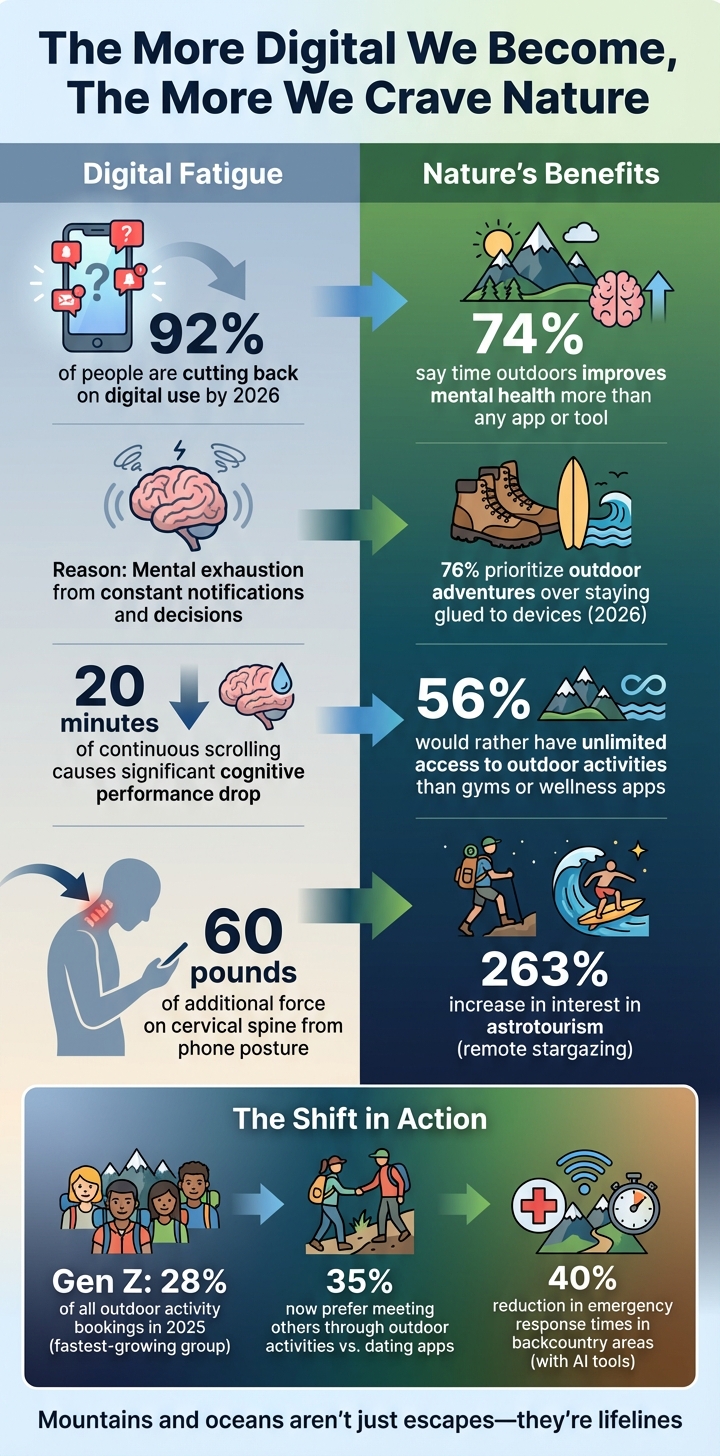
Digital Fatigue vs Nature: Key Statistics on Outdoor Mental Health Benefits 2025-2026
How AI and Digital Technology Are Reshaping Daily Life
AI Is Creating a Hyper-Digital World
AI is changing how we interact with the world around us. From the content we consume to the decisions we make, algorithms play a central role. Social media feeds, dating apps, and even the art displayed in our homes are curated by AI. A fascinating example comes from Japan, where researchers at Ryukoku University and Waseda University introduced "Plant Doctor" in May 2025. This hybrid AI system uses machine-vision algorithms to analyze video footage from drones or garbage trucks, diagnosing the health of urban trees automatically.
Even hobbies are being redefined through AI and data. Wearable devices now track every heartbeat, calorie, and movement, transforming physical activities into streams of measurable metrics. In the retail space, The North Face partnered with IBM Watson to create an AI-driven shopping assistant. This tool uses natural language processing to recommend personalized gear based on trip plans and weather conditions. Meanwhile, Virtual Reality is taking nature experiences to a whole new level. With tools like 360-degree video, combined with scents and sounds, VR can simulate "virtual forest bathing", offering restorative experiences. Research even shows that 360-degree VR nature videos create a deeper sense of presence and emotional engagement compared to traditional 2D formats.
But with this hyper-digital shift comes a pushback. A movement dubbed "Big Analog Energy" is gaining traction. People are seeking out WiFi-free zones and carrying "analog bags" filled with books and sketchpads to disconnect from digital overload. Activities like "astrotourism" - where people travel to remote locations for stargazing - have seen a 263% increase in interest. This growing desire for analog experiences highlights how AI is reshaping not just how we interact with the world, but how we perceive and value physical spaces.
Remote Work Is Disconnecting People from Place
Remote work has brought flexibility, but it has also untethered us from the physical environments that once grounded our daily lives. With a laptop as your office, your location often feels more like a backdrop than a meaningful part of your identity. The same digital metrics that have transformed hobbies are now eroding our connection to physical spaces and communities.
This shift has created an unusual paradox: while remote work allows you to live almost anywhere, it can leave you feeling disconnected from everywhere. Work spills into evenings, and screens mediate nearly all interactions. The physical world often becomes something you observe from a distance - like the view outside your window during a Zoom call. Interestingly, 35% of people now prefer meeting others through outdoor activities rather than relying on algorithm-driven dating apps. This trend reflects a growing desire for authentic, face-to-face connections that digital tools, no matter how advanced, struggle to replicate.
sbb-itb-236ebff
Why Humans Need Nature: Biology and Psychology
Nature Resets Mental Health and Focus
Your brain, though relatively small, requires a tremendous amount of energy, which makes it especially vulnerable to digital fatigue. Constant scrolling on screens activates your brain's vigilance networks, leading to what experts call "directed attention fatigue" - a state of mental exhaustion that comes from extended focus on digital tasks.
Nature, on the other hand, offers something entirely different: "soft fascination." This is the gentle, effortless attention evoked by things like drifting clouds, flowing water, or rustling leaves. Experiences like these give your prefrontal cortex - responsible for decision-making and focus - a much-needed break, helping to rebuild your cognitive resources. A study published in Nature Communications in February 2024 highlighted this contrast. It found that participants underestimated the "vigilance tax" imposed by screen use, with cognitive performance dropping significantly after just 20 minutes of continuous scrolling due to the mental toll of switching tasks.
In January 2026, Boatsetter released its report, The Great Outdoor Shift, based on a survey of 834 U.S. adults. The findings were striking: 74% of respondents said spending time outdoors or on the water improved their mental health more effectively than meditation apps or digital wellness tools. What’s more, Gen Z emerged as the fastest-growing group booking outdoor activities, accounting for 28% of Boatsetter's activity in 2025.
"Research shows that moments of awe, encountering something vast that transcends our current understanding, calm our nervous systems and fundamentally expand our worldview. Nature delivers this in ways screens simply cannot."
- Michael Farb, CEO, Boatsetter
The mental benefits of nature are undeniable, but the physical sensations it provides are just as important.
Physical Sensations That Digital Life Cannot Provide
While nature is a balm for the mind, it also engages your body in ways screens never will. The chill of cold air, the salt on your skin, the stillness of high altitudes - these are sensory experiences that your nervous system craves. Outdoor physical activities like hiking or surfing not only improve your mood but also stimulate the release of neurochemicals and promote neural growth. In contrast, digital activities primarily trigger dopamine, often without the restorative balance your body needs.
Even something as simple as posture reflects this difference. Hours spent looking down at your phone can place up to 60 pounds of additional force on your cervical spine. By contrast, outdoor activities encourage deep breathing and better posture, which activate your parasympathetic nervous system - the part of your body responsible for relaxation and recovery.
"The phone offers passivity disguised as engagement. The hike offers effort that quietly heals."
- Lachlan Brown, Co-founder, Brown Brothers Media
Physical Experiences Are Becoming the New Status Symbol
Powder Days Matter More Than Social Media Metrics
Status is no longer about followers or likes - it's about the experiences you live. According to Boatsetter's The Great Outdoor Shift report from January 2026, 76% of people now prioritize outdoor adventures over staying glued to their devices. Even more telling, 56% would rather have unlimited access to outdoor activities than gyms, studios, or wellness apps. These numbers paint a clear picture: the way we measure status is changing, moving from digital clout to meaningful, physical experiences.
Gen Z is driving this transformation, now accounting for 28% of all Boatsetter bookings. Captains have noticed that younger users are less focused on capturing the "perfect post" and more interested in soaking up authentic, in-the-moment experiences. It's no longer about how many people engage with your content; it's about being fully present when the conditions are just right - whether that’s catching perfect waves or skiing fresh powder.
"Nature delivers [awe] in ways screens simply cannot. When you're watching your kids snorkel off the boat or sailing, your phone disappears. You're present in a way that's become almost countercultural."
- Michael Farb, CEO, Boatsetter
This shift reflects a broader trend: outdoor adventures are becoming the ultimate way to express freedom, balance, and a life well-lived.
Outdoor Adventures Signal Freedom and Balance
As the lure of digital metrics fades, the appeal of real-world experiences becomes undeniable. Mountains, oceans, and outdoor escapes have become symbols of autonomy and balance - markers of a lifestyle where you control your time and attention. In an era dominated by AI and remote work, stepping away from screens feels like a bold act of reclaiming your life. Outdoor adventures offer that escape, signaling a deliberate choice to unplug and reconnect with the world around us.
This trend is deeply rooted in our need for tangible, restorative experiences. Unlike scrolling through endless feeds, physical challenges and outdoor moments leave a lasting impact. As outdoor enthusiast Charlie Nutting puts it, "Sometimes you need to put down the camera and experience them firsthand." This growing focus on being present, rather than performing for an audience, is quietly reshaping what it means to live a fulfilling life.
The Future of Outdoor Culture in an AI World
Mountain Towns Are Becoming Centers of Innovation
As people grow weary of constant screen time, mountain towns are emerging as havens for creativity and connection. No longer just weekend escapes, these communities are evolving into vibrant hubs for remote work. With AI taking care of routine tasks, many are choosing to live where the air is crisp, and the views are inspiring. These areas are attracting a new wave of "cyber-rangers" - individuals equipped with portable tech and AI tools who brainstorm while hiking trails or sipping coffee with breathtaking mountain backdrops.
A recent survey highlights a growing desire to cut back on screen time. Mountain towns provide the ideal solution: a setting where productivity meets nature. Step outside, and you're instantly surrounded by trails, slopes, and quiet landscapes. AI is also making these remote areas safer, with tools that can slash emergency response times in backcountry areas by 40%. This means adventurers can explore further into the wilderness without compromising safety or connectivity.
"Nature gives you chaos, randomness, raw elements... Tech gives you amplification, data, leverage, superpowers. Combine them and suddenly you're... installing firmware upgrades into your soul" - Eric Kim, photographer and writer
Mountain towns are becoming the crossroads where technology and nature meet. They’re places where ideas flow not just from a keyboard but from movement and fresh air. While these high-altitude retreats are sparking innovation, coastal communities are reimagining how work and play can intertwine.
Coastal Areas Are Blending Work and Adventure
Coastal towns are also embracing the shift toward meaningful experiences, attracting remote workers eager to swap lunch breaks for surfing and Zoom calls for sunset sails. These areas are building the infrastructure needed for this hybrid lifestyle, offering co-working spaces with ocean views, reliable high-speed internet, and communities centered around shared outdoor activities. The result? A lifestyle where work seamlessly integrates with adventure.
By 2025, Gen Z became the fastest-growing group booking water-based outdoor activities, signaling a shift in priorities from performance to presence. Younger professionals are choosing coastal living not for social media clout but for the calming rhythm of the tides and the thrill of catching waves. Additionally, 35% of people now prefer meeting others through outdoor groups and activities rather than digital apps.
This approach makes the most of technology, allowing AI to handle mundane tasks while freeing up time for what matters - whether it’s learning to sail, catching the perfect wave, or simply gazing at the horizon.
"Shared experience can serve as an antidote to AI, and it will be crucial to leverage this unique moment in time to create lasting community, connection, and a more human-centric... future" - Sampson Yimer, EVP at Momentum Worldwide
Coastal communities are showing that work and adventure don’t have to be at odds. Instead, they can complement each other, creating a lifestyle that’s both productive and fulfilling.
Malibu Ski League: Apparel for Mountain and Ocean Lifestyles

Gear That Works in Mountains and at the Beach
Malibu Ski League designs hoodies, jackets, and hats that effortlessly move between the slopes and the shoreline. Whether you're carving turns in fresh powder or catching waves at sunset, their gear is built to handle both extremes. A hoodie that keeps you cozy after skiing doubles as the perfect layer to ward off chilly ocean breezes, while their jackets offer reliable protection from both alpine winds and saltwater spray. This blend of practicality and style reflects the adventurous spirit of those who embrace both snow and surf.
Designs That Reflect a Dual-Season Identity
Malibu Ski League's apparel reflects the lifestyle of those who refuse to pick between winter's chill and summer's warmth. Their designs are inspired by real-life adventures, steering clear of flashy trends in favor of functional, meaningful pieces. In a world saturated with digital distractions, these garments stand out as a celebration of genuine outdoor experiences. Founder Lichota Seidewand describes this ethos as one for "beach bums & blizzard junkies", creating a bold aesthetic that feels equally at home on a chairlift or a boardwalk. Each piece is designed to make a statement, blending performance with a lifestyle that thrives across seasons.
A Community of Skiers and Surfers
Beyond their gear, Malibu Ski League nurtures a thriving community of outdoor enthusiasts. By organizing group trips and fostering connections among skiers, snowboarders, and surfers, the brand creates opportunities for shared adventures. These gatherings provide what experts call "low-stakes reasons to show up", encouraging genuine human interaction in an increasingly digital world. Whether tackling backcountry terrain or diving into icy waves, members bond over shared challenges and experiences. This community captures the essence of outdoor living, where the connection to nature and each other takes center stage.
My 3-Day Digital Detox Experience
Conclusion
In a world overflowing with digital content and constant connectivity, our pull toward nature feels stronger than ever. As AI-generated media saturates our screens and remote work loosens our ties to specific places, mountains and oceans evolve from recreational escapes to essential lifelines. These natural spaces provide something screens never can: a gentle mental reset, the satisfaction of effort, and the kind of awe that recalibrates our overstimulated minds. By 2026, 76% of people plan to prioritize outdoor experiences over digital distractions, signaling a clear shift toward reconnecting with the tangible world.
This isn’t about abandoning technology entirely. It’s about understanding that humans thrive on cold air, salt water, and challenges that ground us in the moment. Digital convenience drains our mental energy, while nature replenishes it through movement, mindfulness, and shared experiences. The pursuit of frictionless living often strips away the depth and texture that make life feel meaningful.
This growing need to reconnect with the outdoors is shaping not just individual behaviors but also the way brands operate. Take Malibu Ski League, for instance. Their gear bridges the gap between high-performance functionality and nature’s restorative essence, seamlessly transitioning from snowy slopes to sunlit beaches. But it’s more than just the equipment - they foster a sense of community with group trips, shared challenges, and bonds formed on chairlifts and in surf lineups. This is how people break free from the grip of digital monotony: one adventure at a time, with gear that performs and a tribe that understands.
The road ahead belongs to those who find renewal in mountains and oceans, not in the metrics of online visibility. That’s not escapism - it’s a way to truly live. It’s survival.
FAQs
How do I know if I’m experiencing digital fatigue?
Digital fatigue is that drained feeling you get after spending too much time staring at screens. It often shows up as mental exhaustion, trouble focusing, and an overwhelming urge to step away from devices. Interestingly, while many of us can spend hours outside hiking, gardening, or just enjoying fresh air without feeling worn out, even a short burst of screen time can leave us feeling completely wiped. Spotting these signs early and making time to reconnect with nature can work wonders for restoring your energy and clearing your mind.
How much time in nature helps reset my brain?
Spending just 20 minutes in nature can work wonders for your mind. It helps reduce stress, clears mental clutter, and restores your focus. Think of it as a quick reset for your brain, leaving you feeling recharged and ready to tackle what's next.
How can I balance AI tools with real outdoor life?
Balancing the use of AI tools with outdoor life is about letting technology support - not overshadow - your connection to nature. Think of AI as a helpful companion, whether it’s a device that suggests hiking trails or an app that identifies plants and wildlife. However, it’s crucial to stay grounded in the moment. Set limits on tech usage to ensure your time outdoors remains peaceful and immersive. By blending mindful tech use with nature, you can enjoy the calming effects of the outdoors without letting gadgets take center stage.