




The best ski town bars are not about fancy drinks. They are about the room, the crowd, and the history on the walls.
From Park City to Alta, the bars in this list work for the same reason: locals, lifties, tourists, and second-home owners end up in one place after the lifts close. In many cases, age helps too. Some date back to the 1930s, 1940s, and 1960s. One bar in Jackson has bartenders with an average tenure of 12+ years. Another in Mammoth stays strong by keeping things simple.
If I had to sum up the full article in a few points, it would be this:
- Great ski bars feel like the town’s shared living room
- Low prices help keep the crowd mixed
- Longtime staff help turn visitors into regulars
- Old buildings, wall clutter, and weird rituals matter more than drink menus
- Many of these bars are under pressure from redevelopment, high costs, and property deals
Here are the 12 bars covered in the article:
- No Name Saloon - Park City, Utah
- Million Dollar Cowboy Bar - Jackson, Wyoming
- The Loft Tavern - Ludlow/Okemo, Vermont
- Grumpy's - Ketchum/Sun Valley, Idaho
- Scissorbills Saloon - Big Sky, Montana
- The Sitzmark Bar & Grill - Girdwood, Alaska
- The Mangy Moose - Teton Village, Wyoming
- The Red Lion - Vail, Colorado
- The Office - Mammoth Lakes, California
- The Wobbly Barn - Killington, Vermont
- The P-Dog - Alta, Utah
- The Snake River Saloon - Keystone, Colorado
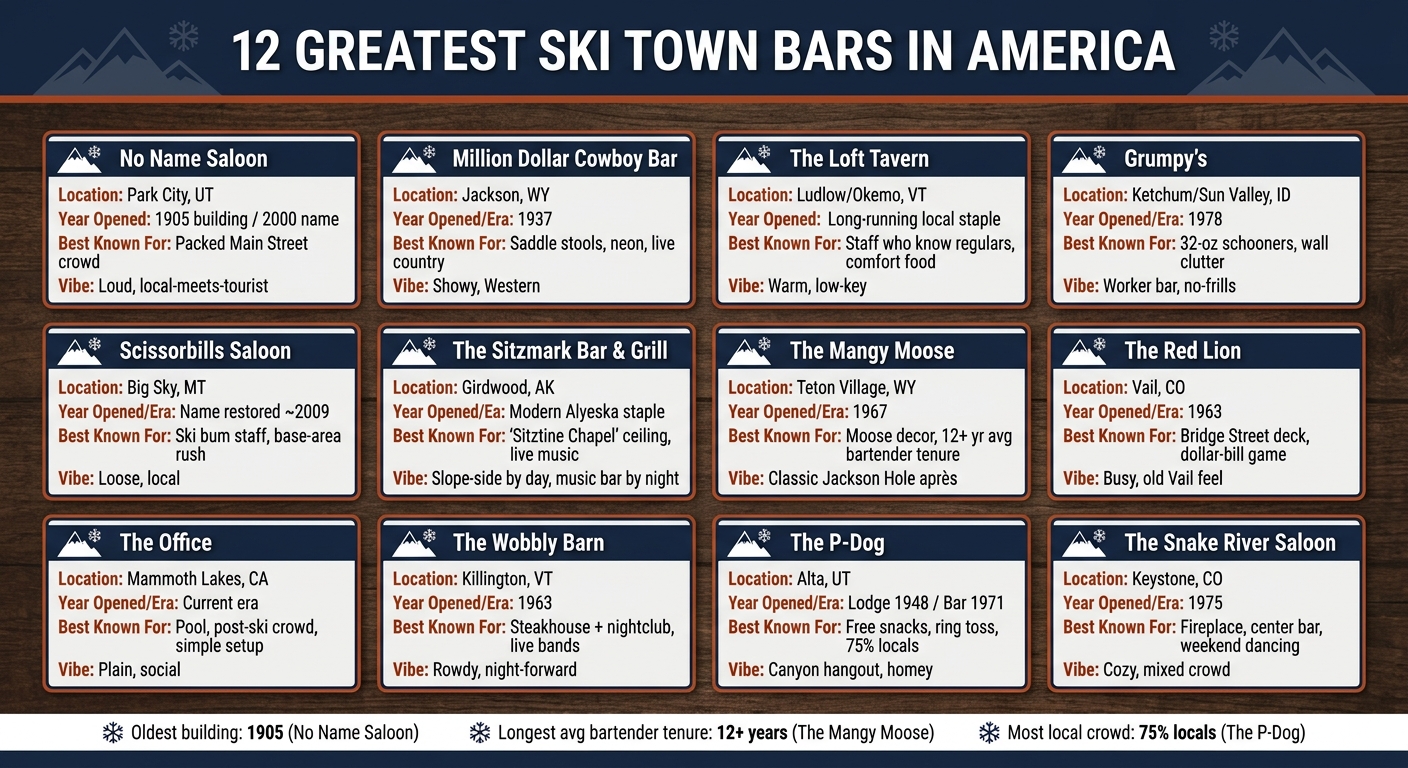
Quick Comparison
| Bar | Location | Opened / Era | Best known for | Main vibe |
|---|---|---|---|---|
| No Name Saloon | Park City, UT | 1905 building / 2000 name change | Packed Main Street crowd | Loud, rough, local-meets-tourist |
| Million Dollar Cowboy Bar | Jackson, WY | 1937 | Saddle stools, neon, live country music | Showy, busy, Western |
| The Loft Tavern | Ludlow/Okemo, VT | Longtime local staple | Staff who know regulars, comfort food | Warm, low-key, local |
| Grumpy's | Ketchum/Sun Valley, ID | 1978 | 32-ounce schooners, burger, wall clutter | Worker bar, no-frills |
| Scissorbills Saloon | Big Sky, MT | Name brought back around 2009 | Ski bum staff, base-area rush | Loose, local, busy after last chair |
| The Sitzmark Bar & Grill | Girdwood, AK | Modern Alyeska staple | “Sitztine Chapel” ceiling, live music | Slope-side by day, music bar by night |
| The Mangy Moose | Teton Village, WY | 1967 | Moose decor, nachos, longtime bartenders | Classic Jackson Hole après |
| The Red Lion | Vail, CO | 1963 | Bridge Street deck, live music, dollar-bill game | Busy, central, old Vail feel |
| The Office | Mammoth Lakes, CA | Current-era local fixture | Pool, post-ski crowd, simple setup | Plain, easy, social |
| The Wobbly Barn | Killington, VT | 1963 | Steakhouse + nightclub, live bands | Rowdy, night-forward |
| The P-Dog | Alta, UT | Lodge from 1948 / bar from 1971 | Free snacks, ring toss, heavy local crowd | Canyon hangout, homey |
| The Snake River Saloon | Keystone, CO | 1975 | Fireplace, center bar, weekend dancing | Cozy, mixed crowd |
What stood out to me most is how often the same pattern shows up. Whether the bar is a red barn in Vermont or a neon cowboy room in Wyoming, the draw is simple: people want one place where mountain life keeps going after skiing ends.
And that is the point of the article. It is less a list of bars and more a case for why these rooms matter.
What Makes a Ski Town Bar Truly Great
It’s not the cocktail list or the playlist. It’s the place itself. You can feel it before you even order. That’s the thread running through the best bars below.
Age has a lot to do with it. Hellroaring Saloon has been there since 1949, and the back bar at Minturn Saloon dates to the 1830s. That tells you something simple: the room lasted longer than trends, owners, and outside pressure.
Staff staying power matters too. At the Mangy Moose in Jackson Hole, the average bartender has worked there for more than 12 years, which means regulars get spotted before they even say a word. That kind of long run behind the bar is what turns tourists, lifties, locals, and old-timers into regulars. And over time, those regulars become part of the place.
These bars also work like an unofficial town hall. Snow reports, deals, and gossip move across the room over burgers and beers. At the Last Dollar Saloon in Telluride, the $5 margarita brings seasonal workers, full-time residents, and wealthy second-home owners into the same space. That mix is a big part of what makes a room feel like a landmark instead of just another stop.
And then there are the traditions that just happened on their own. Bring in a souvenir hat at the Hellroaring Saloon and you get a free second beer for life. The "Minturn Mile" - an out-of-bounds run - ends, fittingly, at the Minturn Saloon. That handed-down feel sets the bar for every place that comes after it.
sbb-itb-236ebff
1. No Name Saloon, Park City, Utah
12 Greatest Ski Town Bars in America: At-a-Glance Guide
When Jesse Shetler took over in 2000, a trademark dispute ended the old Alamo name. His fix was simple: No Name Saloon.
The building at 447 Main Street goes back to 1905. Over the years, it has been a general store, phone office, liquor store, and pool hall. Inside, the old A.L.A.M.O. sign still hangs. It stands for America's Last Authentic Miner's Organization, a nod to the silver hunters who first made the place their hangout. The dirt floors are long gone, but the space still feels rough around the edges. And that edge matters. No Name makes the most sense when the room is packed, noisy, and a little chaotic.
During peak season, the bar fills up fast with seasonal workers, lifties, locals, and tourists. It's been called Utah's busiest bar, and that crush of people is part of why it works. Once the lifts stop spinning, Park City seems to spill straight into this room.
Bob Edmiston, better known to regulars as Mr. Ed, has been part of the bar's story for decades. Every Thanksgiving, Freebird turns the place into a free buffet for locals, seasonal workers, and anyone who would otherwise spend the holiday alone. Bruce, a longtime regular, put it plainly:
"It's a big locals' reunion. We won't see folks for a year... It's wonderful that No Name does this for the people that really need it."
No Name is a mining relic that became Main Street's gathering spot. Park City's version is blunt and workmanlike; Jackson's next stop swaps that grit for spectacle.
2. Million Dollar Cowboy Bar, Jackson, Wyoming
The Million Dollar Cowboy Bar is Jackson’s flashier counterpart: louder, shinier, and built for a room where people want to see and be seen. Right on Town Square in the heart of Jackson Hole, it has been a Wyoming landmark since 1937. Most people notice the local-pine bar and saddle stools first. Those came in 1973. Together, they spell out the place in seconds. It’s still one of the clearest versions of Jackson Hole’s split personality: cowboy showmanship with the weight of a working town behind it. The room turns spectacle into something almost everyday. That’s why it lands.
The “Million Dollar” name comes from a 1953 explosion that blew the building apart. Owner Press Parkinson rebuilt it and insured it for $1 million. The bar lasted because people cared enough to bring it back, and that survival is what turned it into a legend.
Its staying power also comes from who shows up. Ranch hands, locals, tourists, and the occasional celebrity all end up on the same saddle stools. That mix gives the place its pulse. Waylon Jennings, Willie Nelson, and Hank Williams Jr. have all played the stage.
In 2018, the Baxter family bought the building and kept its bones in place: preserve the architecture, update the sound, and leave the room’s character alone. The neon marquee is still one of Jackson’s most photographed landmarks.
From here, the best ski bars get rougher around the edges and more local, but the same rule still applies: the room matters more than the drink list.
3. The Loft Tavern, Ludlow/Okemo, Vermont
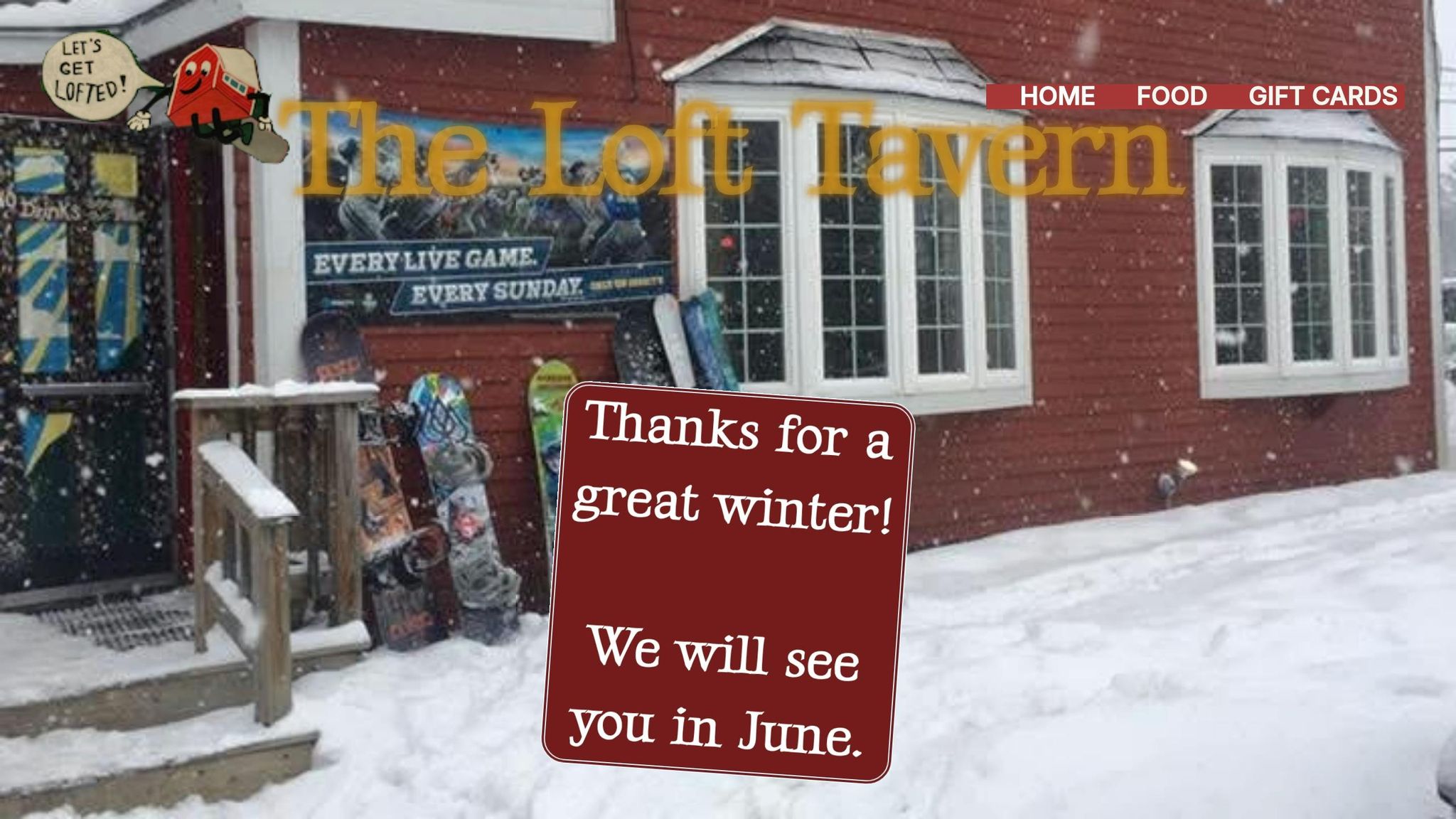
If Jackson's Million Dollar Cowboy Bar is all show, The Loft Tavern is the opposite. It sits to the left of the Okemo base lodge in a red barn, and it doesn't seem interested in impressing anybody. Jackson puts on a performance. Okemo just settles into itself.
The bar has long leaned into the old joke about warm beer, bad food, and a cranky owner. But the truth is much better: cold beer, good food, and Tom Koch, who ran the place for more than 20 years before retiring in May 2022. He handed it off to three longtime employees - Rebecca Holland, Dorothy Josselyn, and Marie O'Hare - and they kept the original recipes in place, especially the pulled pork, brisket, poutine fries, and wings. That shift meant more than a new name on the paperwork. It carried over the memory of the place. The food stayed the same. The pace stayed the same. The tone stayed the same.
At night, you can see that continuity in action. The Loft turns into Okemo's gathering room, and the staff still notices regulars through the front window and starts making their usual drink before they even get inside. That's the kind of small ritual that turns a bar into a local institution.
"We're like a big family... We really do all take care of each other, and have each other's backs." - Rebecca Holland, Co-owner, The Loft Tavern
It still feels like a local bar first and an après-ski stop second. That's the draw. The Loft works because it's plain, warm, and comfortable, while the next bar leans into a different kind of hometown pull.
4. Grumpy's, Ketchum/Sun Valley, Idaho
If The Loft feels like a neighborhood living room, Grumpy's is its rougher cousin: a locals' bar tucked just out of sight from Sun Valley's polished face. It's behind a laundromat in Ketchum's Light Industrial District, in a rustic building that looks more like a house than a bar. Gary Goodenough opened it in 1978 as an offshoot of his "Roach Coach" catering business for construction workers, and that workingman spirit has stuck, even as Sun Valley has moved upmarket. The sign still says, "Sorry, We're Open." That tells you almost everything you need to know. This is a place for locals who want a beer and a burger, not a scene.
Inside, the room feels layered rather than designed. License plates, stickers, beer cans, and old odds and ends cover almost every inch. As Diego Marín wrote, "The license plates, stickers, beer cans, and collected ephemera that cover every available surface are not an aesthetic decision - they are archaeology." Each layer feels like one more winter, one more crew, one more stretch of mountain life pressed into the walls.
The house drink is a 32-ounce schooner, a name given by the Australian mother of the bar's first female bartender. Pair it with the Grumpy Burger, and the place snaps into focus: this is still a bar for people who work on the mountain, not just people passing through. On a given night, you'll find locals, ski patrollers, construction workers, seasonal staff, and tourists sharing the same barstools without much fuss. That mix of lifties, workers, and visitors is a big part of what keeps ski-town bars from turning into private clubs.
That matters even more in a place like Sun Valley, where upscale pressure has changed almost everything around it. In 2022, more than 50 local investors bought the bar and the property to keep it from being sold or turned into something else.
5. Scissorbills Saloon, Big Sky, Montana
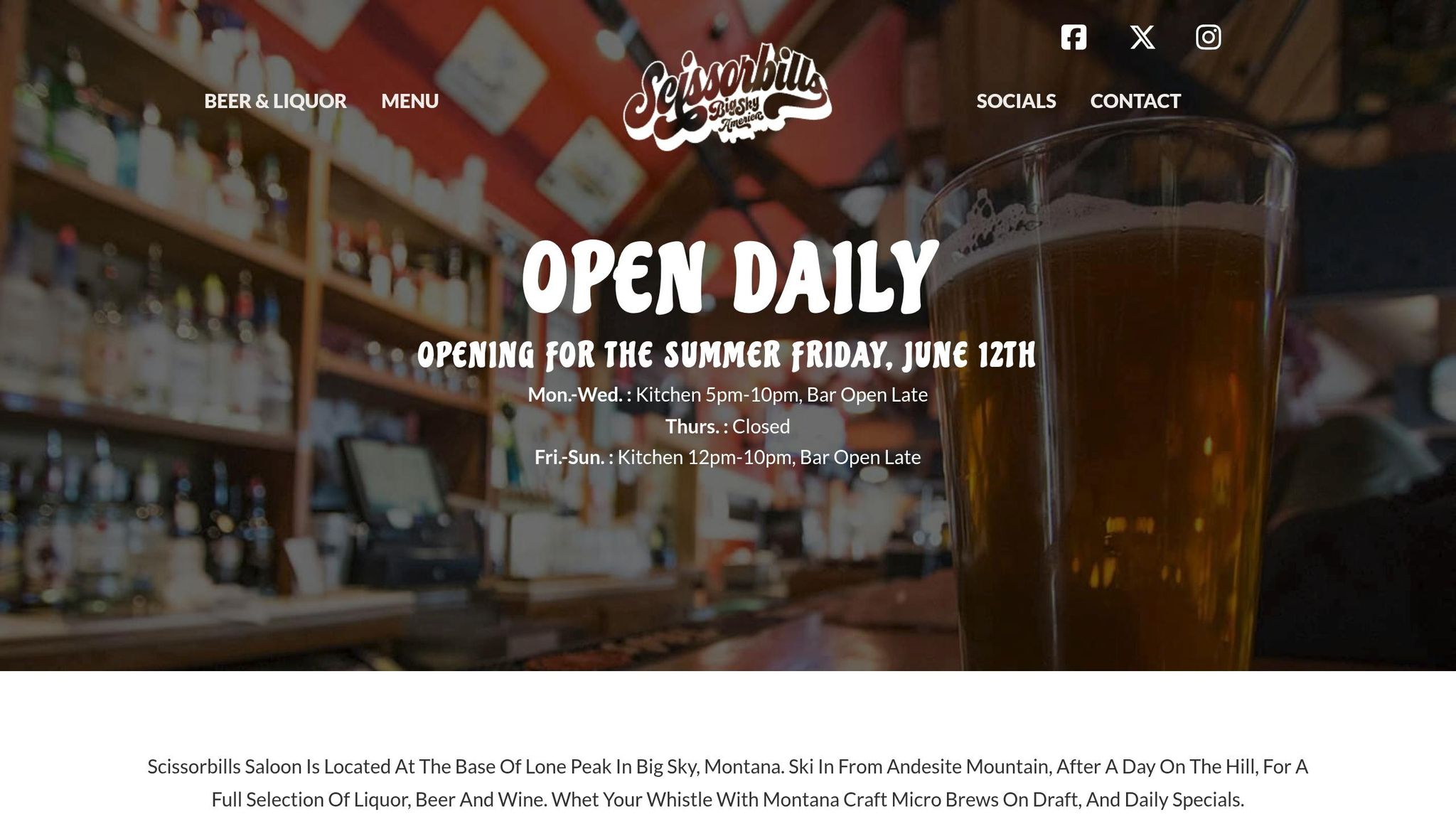
“Scissorbill” means an inexperienced rancher, and the bar wears that name with pride. You’ll find it in Big Sky’s Mountain Village at the base of Lone Peak. It’s a locals’ spot with plenty of resort traffic, plus ski-in access from Andesite Mountain and six rotating Montana craft microbrews on tap. That last-chair rush gives the place a loud, loose pulse.
The name matters here. Locals spent two years pushing to bring back the original Scissorbills name after the Bambu Bar and Asian Bistro stretch, and they got it back around 2009. That fight still hangs in the room. You can feel it in the crowd and in the people behind the bar.
Operating partner Keith Kuhns has kept the place a little scrappy on purpose. About half the staff heads out on powder days, and the most die-hard skiers rack up more than 80 days each winter. Staffing also shifts with the season, growing from 8 in summer to 20 during après. As Kuhns puts it:
"My staff, they're all ski bums so they want to have fun on the hill and fun at work too."
After last chair, lifties, instructors, seasonals, and visitors all pour in. It becomes a Lone Peak mix that probably wouldn’t land in the same room anywhere else, and that’s a big part of why Big Sky still feels like a ski town instead of just a resort.
6. The Sitzmark Bar & Grill, Girdwood, Alaska
About 40 minutes from Anchorage, the Sitzmark sits at the base of Chair 3 at Alyeska Resort in Girdwood, Alaska. If the last stop had Western swagger, this place feels like a full day-to-night crossover.
During the day, it's a slope-side stop with more than a dozen Alaskan beers on tap, burgers, and a back room with foosball and pool. Families, skiers, riders, and day-trippers from Anchorage all show up for the same reason: a warm place to land after the hill.
After 8 p.m., the room shifts gears. It becomes a live-music spot open until 1:00 a.m., with open mics, trivia, bands, and movie nights on the calendar. That range is part of the draw. The Sitzmark can handle a low-key lunch and a loud late night without feeling like two different places.
What makes it hard to forget is the ceiling.
Its signature feature is the "Sitztine Chapel", an eight-panel ceiling by local artist Dawn Gerety with blacklight paint, silver beads, and disco balls, showing the Northern Lights, a howling wolf, and a powder skier mid-run. In daylight, it stands out. At night, it feels almost like stage scenery.
"The Sitz is a fantastic place to see live music. The sound system is top-notch and there is plenty of space to dance with great vantage points. The interior decor, especially the Sitztine Chapel ceiling is awesome." - Patty Wilbanks, Visit Girdwood
What keeps the Sitzmark rooted is its role in Girdwood's social scene. It's the slope-side pick, while nearby Chair 5 - known locally as "the Dive" - is the local hangout in the New Townsite. In summer, the après-ski crowd turns into an après-hike crowd, and the bar keeps moving right along. That's why it works: locals, resort guests, and skiers and riders from across Alaska all end up in the same room. That same mix of locals, resort workers, and visitors shows up again in the next bar, just in a very different setting.
7. The Mangy Moose, Teton Village, Wyoming
From Alaska, the trail heads back to the Tetons, where The Mangy Moose has been part of Teton Village since 1967. It opened the same year Jackson Hole Mountain Resort started tram service, and it has been a fixture in the village ever since.
Walk in and the first thing that hits you is the moose overhead: a life-size taxidermy moose hanging from the ceiling. Then your eyes drift to the walls, which are loaded with relics, from an 1850s oxen yoke to a signed B.B. King guitar.
What keeps the Moose from feeling like a pure tourist play is the people behind the bar. The average bartender has been there for more than 12 years, and some, like Max Diem, have put in 17 years. That kind of staying power gives the place its center of gravity. This isn’t some staged throwback. It’s a living social spot built on memory, routine, and regulars. General Manager Alexie Messer puts it like this:
"I personally like to believe that stepping into the Moose Saloon is like taking a trip back in time to the original wild, but also simple, ski culture of the '70s and '80s."
In winter, live music runs every day from 4:30 p.m. to 6:30 p.m. The upstairs Up Bar tends to pull in more locals, while the main floor fills up with families, tourists, bell-to-bell skiers, and the people who come back year after year. Over time, the stage has welcomed everyone from Kris Kristofferson to Brandi Carlile.
A classic order here is the World Famous Moose Nachos with a Spicy Margarita made with jalapeños and fresh fruit. The bar even turned that ritual into a canned drink billed as “Après in a can” for the road. Forbes also named it one of the 10 hottest ski bars in the world. And while Teton Village keeps changing, the owners have kept putting money back into the original building so its 1967 feel stays in place.
That same blend of tourists, locals, and hard-core skiers shows up again at the next stop, just with a sharper edge.
8. The Red Lion, Vail, Colorado
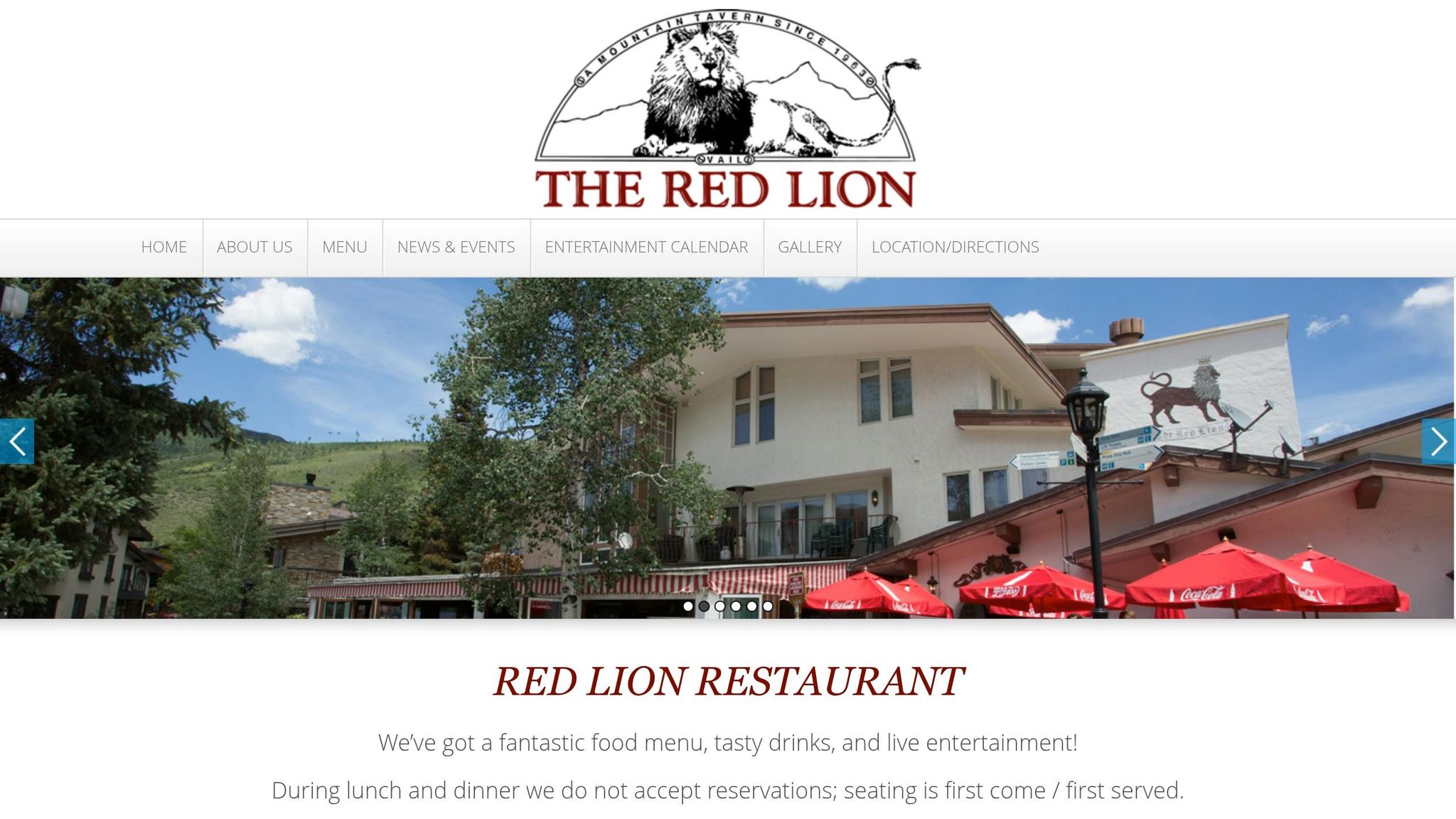
The Red Lion opened in February 1963, just weeks after Vail Mountain welcomed its first skiers, and it remains one of the oldest original buildings still standing in Vail Village. Before it became a bar, the building briefly worked as Vail's first medical clinic. It was also where Vail's first baby, Karl Eaton, was delivered. That backstory still hangs over the place. Now, all of that history sits just a few steps from the lifts, where many ski days in Vail still wind down.
On Bridge Street, right near the ski lifts, The Red Lion feels like the default last stop of the day. Skiers come straight to the front deck after their final run, boots still on and cheeks still red from the cold. During a packed winter day, the bar can turn over three or four times and serve more than 1,000 guests, even though its legal capacity is about 335.
That spillover has long shaped the crowd inside. Basque sheepherders once shared the bar with locals, old-timers, and visiting skiers, all in one of the few original rooms left from the period before Vail changed from a working mountain town into a resort stop. Phil Long has played there for more than 35 years, every Wednesday through Saturday, blending oldies, newer songs, and crowd-participation bits. One small ritual still says a lot about the room: patrons throw crumpled dollar bills across the bar into the tip jar for a shot at winning drinks for the table.
Its next chapter is less clear. The current lease runs out in April 2027, and a proposed redesign would cut down the space and move it into a windowless below-grade spot. Co-owner Rod Linafelter summed up the worry this way: "People don't want to go into a windowless basement for an apres ski drink and meal." From Bridge Street, the après trail keeps heading west.
9. The Office, Mammoth Lakes, California
In Mammoth Lakes, that same after-lifts pull ends up at The Office. It’s Mammoth’s no-frills release valve: locals, lifties, and weekend skiers all wind up in the same room once the lifts stop spinning. The bar sits right in the middle of Mammoth’s social scene - not polished enough to feel like a resort stop, not rough enough to put anyone on edge. It hits the middle ground, which is exactly where a ski-town bar belongs.
What makes the place click is how easily strangers slip into the local routine. After last chair, people show up still carrying the day with them - wet jackets, sore legs, and that loose, easy feeling that comes after hours on the mountain. A pool game starts, and before long someone new gets waved in. Snow reports drift down the bar. The kind of talk that only shows up when people are tired, happy, and in no rush takes over the room.
That rhythm is the real draw at The Office: a Mammoth bar that runs on mountain energy, not resort image.
10. The Wobbly Barn, Killington, Vermont
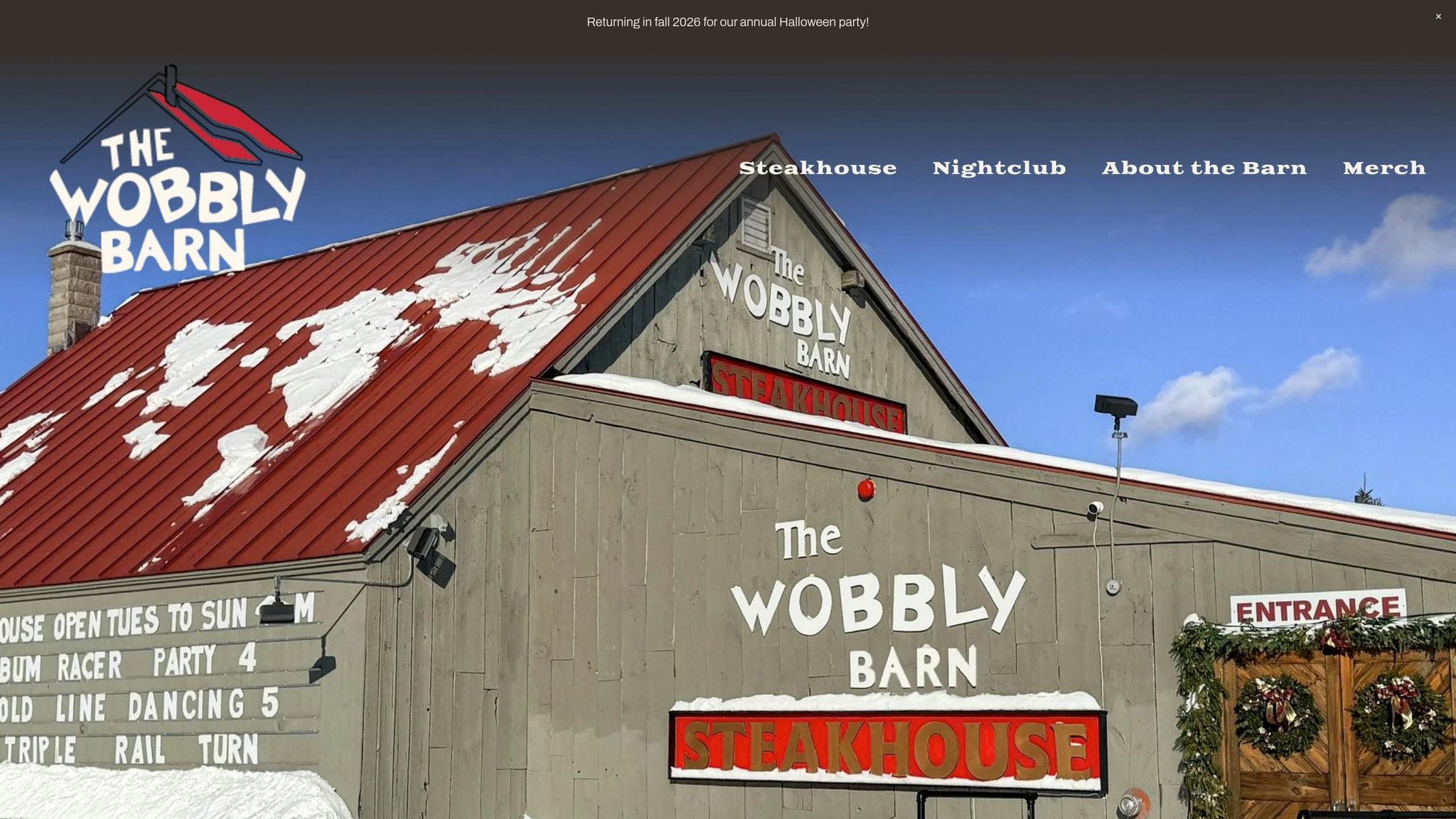
If The Office is Mammoth's stripped-down spillover spot, The Wobbly Barn is Vermont's louder, rowdier take on that same after-ski meetup. It's been open since 1963 and has been part of Killington for more than 60 years. The building itself sets the tone: it was made from hand-hewn timbers salvaged from 10 Vermont barns.
Live music fills the place nearly every night, and weekends often add a second band. The Wobbly Barn also pulls off a tough combo: it's both a steakhouse and a nightclub. Its split-level layout helps keep dinner, drinks, and dancing in motion without making the room feel jammed.
That setup has earned notice, too. In a 2022 Vermont Ski + Ride reader survey, it ranked No. 1 for live music and No. 2 for après-ski bars in Vermont. You get diners, dancers, locals, and passing ski-town characters all in one room. That's the whole draw. A day on the mountain doesn't just end here - it rolls straight into the night.
"They are the places where you might find an Olympian, a rock star, a Fortune 500 CEO, the local plow driver and a lifty all lifting a glass together." - Lisa Lynn, Editor, VT SKI + RIDE
11. The P-Dog, Alta, Utah
The Peruvian Bar, better known as the P-Dog, has deep roots in Alta. It began life as World War II barracks in Brigham City, then got cut into four pieces, hauled up Little Cottonwood Canyon, and worked into the Peruvian Lodge in 1948. The result is a room made from reused parts that still feels hand-built. When the bar opened in 1971, it quickly became Alta's go-to après spot. That backstory still sets the pace in the room.
Alta's style shows up in every corner. The place mixes wartime bones with offbeat mountain decor: a stuffed buffalo head, a polar bear on the wall, and the kind of ski-lodge clutter that seems to multiply on its own. SKI Magazine called the Peruvian "decidedly lowbrow", adding that "it is this warmth and homeyness that brings families back year after year."
Most of the crowd knows the canyon well. About 75% are locals - ski bums, resort employees, and pro skiers - alongside lodge guests and visiting skiers trading stories after laps off Westward Ho. The après routine leans hard on local custom:
- Ring toss
- Live music on Wednesdays and Sundays
- Live Alta Radio broadcasts on Friday nights
- Free appetizers while supplies last, including croissants made by 30-year canyon veteran Gin Chao
The drinks keep close to home, and the margarita is the house pick. Manager Matt Taylor puts it simply: "Three quarters locals, but there's always room for our guests at the bar." In Alta, this is where people count the day's laps, then tell the stories all over again.
12. The Snake River Saloon, Keystone, Colorado
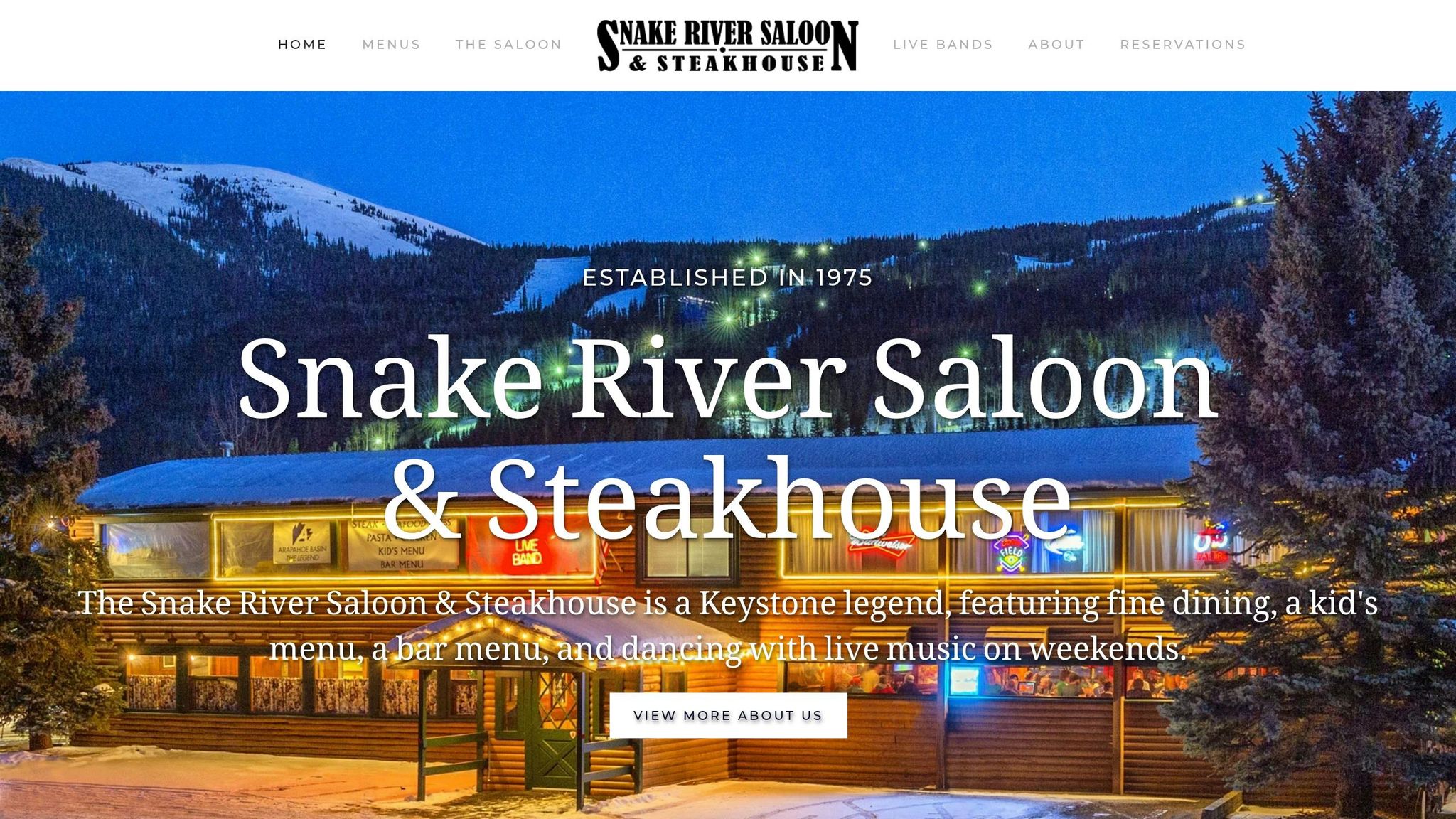
The Snake River Saloon has been part of Keystone since 1975, and its hospitality story in the area goes back to 1954. You’ll find it at 23074 US Highway 6, right in the resort zone.
What makes the place stand out is its split personality in the best way. Part of it runs as a steakhouse, part as a saloon. On the saloon side, there’s a copper-topped center bar and a big stone fireplace that keeps people hanging around long after last chair. At night, the line between the steakhouse and the saloon starts to fade, and the whole place feels like one shared room.
On weekends, live music and dancing pull in a mixed crowd: families, visiting skiers, and locals who’ve been coming for years. There’s also a billiards table, which gives people a spot to wander between songs while the band keeps playing. The après setup stays simple and easy to like:
- Daily happy hour
- Classic pub fare
- Cocktails
- Grasshopper pie for the regulars
"The Snake has the cozy bar feeling with amazing live entertainment on the weekends." - Snake River Saloon & Steakhouse
That’s the draw here. It gives skiers, locals, and families one comfortable place to land.
How the Best Ski Bars Hold Mountain Towns Together
From one mountain region to another, the same thing keeps showing up: a bar takes the spirit of its town and turns it into a shared room where locals and visitors sit side by side.
Price is a big part of that. The best ski bars stay open to the whole town, not just the people with the biggest tab.
Low prices make that possible. The Last Dollar Saloon in Telluride has kept its prices at $3 beers, $5 pint-glass margaritas, and $7 well drinks since it opened on the same corner in 1978. That kind of pricing changes the mood of a place. When a seasonal worker and a second-home owner pay the same amount for a drink, the room feels more even. Cheap drinks bring people in, but they don't hold a bar together on their own.
Staff do that.
High turnover can wreck the feel in a hurry. The bars that keep towns stitched together usually have the same people behind the counter for years, and sometimes for decades. Longtime staff know the regulars by name. They remember habits, stories, and who's been coming in since when. That makes the bar feel like part of the town itself, not just another place doing business.
That's why these rooms start to feel like archives. They hold memory in the people, the habits, and the small worn-in details that don't look like much until you realize they've outlasted almost everything around them.
The pattern shows up all over the country, even if the details shift from one region to the next.
A Region-by-Region Look at America's Ski Bar Scene
The après-ski ritual changes from one part of the country to another. Geography helps shape the crowd. History helps shape the room.
That same pull shows up in very different ways depending on where you are.
Western bars tend to wear their past right on the wall. In Park City, No Name Saloon leans into its miner's-organization identity. In Jackson, Million Dollar Cowboy Bar goes all in with actual saddle seats at the bar counter. The design points straight to each town's past, but the room still belongs to the people filling it now.
New England bars pull from a different past. Killington's Wobbly Barn was constructed using pieces from old Vermont barns. That turns local farm history into the place where skiers end up after last chair.
Alaska sits in a class of its own. Distance, weather, and the short season shape its bars into warmer, rougher, more community-dependent rooms than anything in the Lower 48. Remoteness doesn't thin the crowd. If anything, it makes the bar matter more. It's the social hub for the whole town, the one spot where resort workers and backcountry regulars end up side by side.
Those regional differences shape how each bar helps hold its town together.
Why These Bars Are Disappearing and Why It Matters
That social mix lasts only as long as the bar itself lasts. And right now, even the best ski bars are under pressure. Real estate deals, resort redevelopment, and old buildings in need of expensive fixes are slowly shutting down the rooms that used to hold ski towns together.
In Telluride, the Last Dollar Saloon still pours a $5 margarita, even as the town around it gets pricier and pricier. That price says a lot. It’s a small act of resistance in a place where home prices have gone off the rails.
Old infrastructure is another problem. The Bucksnort Saloon in Pine, Colorado, built in 1919, shut down for three years after septic, zoning, and electrical violations stacked up past what the previous owners could pay to repair. Dr. Pete Kazura, a pediatric emergency physician, bought the building in November 2023, pushed through the repairs, and reopened the bar on July 10, 2025, with former owner Galina Bye back as manager. That’s what gives Galina Bye’s words so much weight:
"Yes, I owned the Bucksnort, but the Bucksnort owned me. And I cared about my customers, and I worried about them, but there was nothing I could do."
Sometimes the issue is a building that’s falling apart. Sometimes it’s a developer with a more profitable plan. Resort redevelopment adds even more strain. When KSL acquired Squaw Valley in 2010, early plans leaned toward new towers instead of old bars. Locals pushed back with "Save the Chammy" stickers to protect Le Chamois, a bar founded in 1969, and the final development plan left it alone. Owners Katja Dahl and Junior Wilson still keep it going in part by running a separate excavation business that helps pay for the bar.
Some towns are fighting back in a more direct way. In October 2022, more than 50 local investors in Ketchum, Idaho, pooled money to buy Lefty's Bar & Grill - both the business and the real estate - so it would stay in local hands. The goal was simple: keep the free pool tables, keep the $15–$30 tabs, and keep the place functioning as a community hub.
Put all of that together, and the loss starts to look bigger than a single business closing. When one of these bars disappears, a town loses its common room. It loses the one place where locals, tourists, lift workers, old-timers, and people with money still end up in the same space without trying too hard. These bars tend to run on thin margins and heavy risk, which helps explain why so many burn out or slip away even in busy, affluent resort towns. And what replaces them is often more polished, smaller in spirit, and less rooted in the town around it.
Conclusion: The Last Honest Rooms in Ski Country
Taken together, these rooms are more than bars. They’re the places where ski towns remember who they are after the lifts stop spinning. Some wear their years in plain sight: worn barstools, scarred wood, and walls that feel like a mountain archive. None of that showed up by accident. It came from people returning, caring, and picking these rooms over the easier, shinier spots.
That’s what makes a great ski town bar something you earn, not something you stage.
The real test isn’t the drink menu. It’s the mix in the room. These places stay open to everyone: locals, lifties, second-home owners, and first-time visitors.
What you get from a day on the hill carries into the evening inside these walls. When rooms like this vanish, towns lose their common room, their memory, and one of the last places where status fades for a little while.
FAQs
What actually makes a ski town bar great?
A great ski town bar has deep roots, a strong sense of place, and a character that stays the same even as the resort around it shifts.
What makes it work is simple: locals, lifties, and tourists all end up in the same room, and it feels natural. The staff know the regulars. The drinks don’t cost a fortune. The walls are packed with local lore. Put it all together, and the place feels less like a bar and more like the town’s living room - one where people from different walks of life share the same mountain ritual.
Why are old ski town bars disappearing?
Old ski town bars are disappearing because they’re high-risk, low-margin businesses. That’s a rough mix on its own. Add rising rents and pressure from deeper-pocketed owners who can afford to lose money for a while, and a lot of these places get squeezed out.
There’s more working against them, too. Many are dealing with redevelopment plans, leases that are running out, and older buildings that need costly repairs. At the same time, the local workforce is shrinking, and the affordable housing that once kept bartenders, servers, and regulars in town is fading away.
How can travelers spot a true local ski bar?
Look for longevity and community, not luxury or polish. A true local ski bar tends to have longtime staff who know regulars by name, an easygoing vibe, and a room where locals, seasonal workers, and tourists all end up side by side.
The decor usually tells the story too. Old memorabilia, scraps of local history, and little community rituals often point to a place shaped by relationships, not tourist trends.